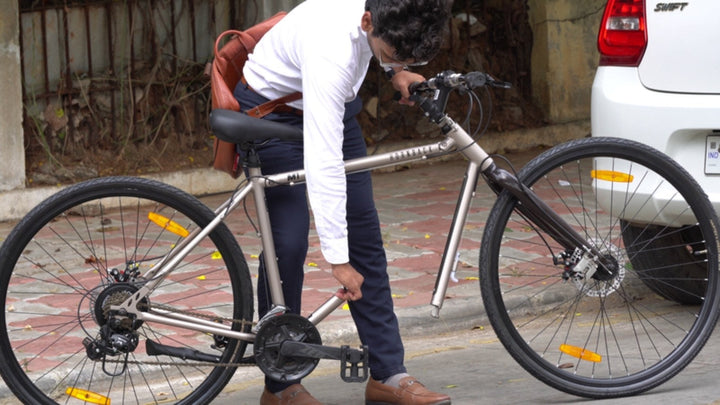
Allen Key Uses in a Bicycle

1. What Is an Allen Key and Why Do Bicycles Depend on It?
An Allen key is a simple, hexagonal-shaped tool designed to fit hex socket bolts. These bolts are widely used in bicycles because they:
- distribute force evenly
- are compact and lightweight
- allow precise tightening
- resist slipping better than flat or Phillips screws
Modern bicycles—especially performance, MTB, urban, and electric cycles—use Allen bolts almost everywhere because they offer strength without bulk.
According to bicycle component manufacturers, hex bolts became standard as bikes evolved to be:
- lighter
- more adjustable
- modular
This is why one small Allen key can control so many parts of your cycle.
2. Where Allen Keys Are Used on a Bicycle (Almost Everywhere)
Here’s where Allen keys are most commonly used on cycles:
Handlebar & Stem
- tightening the stem bolts
- aligning the handlebar
- adjusting handlebar angle
Loose handlebars are not just uncomfortable—they’re dangerous. Allen bolts here keep steering stable.
Saddle & Seatpost
- adjusting seat height
- adjusting saddle angle
- tightening seatpost clamps
A poorly tightened seatpost can slowly slip while riding, leading to knee strain or loss of control.
Brakes & Gear Levers
- brake lever positioning
- shifter alignment
- brake caliper adjustments
Proper positioning improves control and reduces wrist fatigue, especially on long rides.
Derailleurs (on geared cycles)
- fine-tuning gear alignment
- limiting gear movement
This is where precision matters. Even a quarter-turn of an Allen key can improve or ruin shifting.
Accessories & Add-ons
- bottle mounts
- stands
- folding mechanisms
- racks and guards (where applicable)
Most bicycle accessories rely on Allen bolts because they’re easy to install and remove without special tools.
3. Common Allen Key Sizes Used in Bicycles
Most bicycles use metric Allen keys, typically:
- 3 mm – small components, accessories
- 4 mm – brake levers, shifters, seat clamps
- 5 mm – stem bolts, seatposts, major fittings
- 6 mm – some crank or heavy-duty fittings
A basic multi-size Allen key set covers nearly 90% of bicycle adjustments. This is why most portable bike tool kits revolve around Allen keys.
4. How Tight Is “Tight Enough”? (This Is Where People Mess Up)
One of the most common bicycle mistakes is over-tightening.
Allen bolts don’t need brute force. Over-tightening can:
- strip threads
- crack components
- damage carbon or aluminium parts
Bicycle engineers recommend tightening bolts to specific torque values, especially on stems and seatposts.
According to Shimano and other component manufacturers, most bicycle bolts require between 4–6 Nm (Newton meters).
In simple terms:
If you’re straining your wrist, you’ve gone too far.
5. Why Allen Keys Matter for Safety (Not Just Maintenance)
Many cycling accidents caused by “mechanical failure” aren’t due to broken parts—they’re due to loose bolts.
Research in cycling safety studies shows that:
- loose handlebars
- slipping seatposts
- misaligned brakes
are common contributors to loss of control.
Regular Allen key checks help prevent:
- sudden component movement
- gradual loosening from vibrations
- long-term wear
A 2-minute check every few weeks can prevent months of discomfort—or worse.
6. Lifestyle Reality: Why Knowing Allen Keys Saves You Time and Money
Knowing how to use an Allen key means:
- fewer mechanic visits
- quicker adjustments
- better riding comfort
- immediate fixes at home
For riders who store their cycle indoors or use it daily, small adjustments become part of normal ownership—not a chore.
This is especially true for foldable or frequently used cycles, where:
- hinges
- clamps
- adjustable components
benefit from occasional tightening.
When a cycle integrates easily into daily life, small Allen key adjustments keep everything feeling “dialled in” rather than neglected.
7. What NOT to Do With an Allen Key
Common mistakes:
- using the wrong size (rounds off bolts)
- tightening at an angle
- forcing stuck bolts without lubricant
- using cheap, soft-metal keys that deform
A worn Allen key damages bolts faster than loose riding ever will.
Investing in a decent steel Allen key set is one of the best low-cost upgrades any cyclist can make.
8. Allen Keys and Electric Cycles: Same Tool, More Responsibility
Electric cycles use Allen keys just as extensively—for:
- handlebar clamps
- seatposts
- accessory mounts
- folding mechanisms
The difference?
Electric cycles are heavier and faster, which means bolt security matters even more.
Manufacturers strongly recommend:
- regular bolt checks
- correct torque
- gentle tightening
because loose components on an e-bike experience higher forces over time.
Final Thoughts
The Allen key isn’t just a tool—it’s your connection to how your bicycle actually works.
Understanding where and how to use it means:
- better comfort
- safer rides
- longer component life
- more confidence as a rider
You don’t need to be a mechanic.
You just need to know what that little hex-shaped tool does.
And once you do, your cycle stops feeling mysterious—and starts feeling like yours.