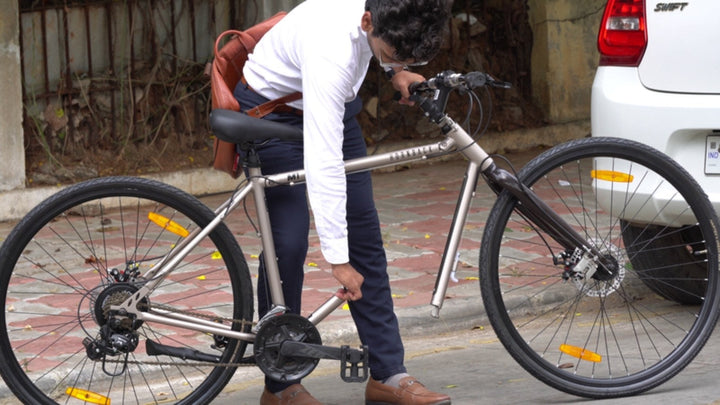
Pre-Ride Bicycle Safety Check

The “A-B-C-Q” Method: A Simple System That Works
Many cycling safety organisations recommend the A-B-C-Q method because it’s easy to remember and covers all critical areas:
- A – Air
- B – Brakes
- C – Chain & Crank
- Q – Quick releases & Bolts
Let’s go through each one in detail.
1. A Is for Air: Tyres Matter More Than You Think

Tyres are your only contact point with the road. Incorrect tyre pressure affects:
- grip
- braking distance
- comfort
- puncture resistance
What to Check:
- Squeeze both tyres — they should feel firm, not rock-hard or soft
- Look for cuts, bulges, or embedded glass
- Check pressure if you have a pump gauge
Why It Matters:
Under-inflated tyres increase rolling resistance and puncture risk. Over-inflated tyres reduce grip and comfort.
According to Cycling UK, incorrect tyre pressure is one of the most common causes of avoidable breakdowns.
2. B Is for Brakes: Your First Line of Safety

Brakes should respond instantly and smoothly.
What to Check:
- Squeeze both brake levers — they should not touch the handlebar
- Spin the wheels to ensure brakes engage evenly
- Look at brake pads — they should not be worn down completely
Why It Matters:
Worn or poorly adjusted brakes significantly increase stopping distance, especially in wet conditions.
The European Transport Safety Council highlights braking performance as a critical factor in urban cycling safety.
3. C Is for Chain & Crank: Smooth Power, Fewer Problems

Your drivetrain transfers effort from your legs to the wheels. If it’s neglected, efficiency and safety drop.
What to Check:
- Is the chain clean and lightly lubricated?
- Do the pedals rotate smoothly?
- Are the cranks firmly attached?
Why It Matters:
A dry or dirty chain wears faster and can slip under load. A loose crank can cause loss of control.
According to Park Tool, regular chain inspection can double drivetrain life.
4. Q Is for Quick Releases & Bolts: The Silent Risk

Loose components are one of the most overlooked safety issues.
What to Check:
- Wheels are securely fastened
- Saddle does not twist or slide
- Handlebar and stem do not move when pushed
- Use an Allen key to gently confirm tightness — no force required
Why It Matters:
Most “sudden failures” are actually gradual loosening due to vibration.
Cycling safety studies show that routine bolt checks dramatically reduce mechanical incidents.
Extra Checks for Electric Cycles
- Battery securely locked in place
- Display and controls functioning normally
- No exposed wires or loose connectors
- Bike is powered off before inspection
Electric cycles rely on electrical integrity as much as mechanical safety.
The International Energy Agency notes that proper handling and inspection significantly extend e-bike lifespan.
Why These Checks Matter in Real Life
Most cyclists skip pre-ride checks because:
- “The ride is short”
- “It worked yesterday”
- “I’m in a hurry”
But urban cycling studies show that minor mechanical issues are a leading cause of avoidable accidents, especially during short, routine trips.
A 5-minute check:
- prevents roadside breakdowns
- improves ride comfort
- reduces long-term maintenance costs
- builds rider confidence
Consistency beats expertise here.
How Often Should You Do a Pre-Ride Check?
- Daily riders: Quick check before every ride
- Occasional riders: Always check before riding
- After rain or storage: Mandatory check
Think of it like checking your phone battery before leaving home — simple, automatic, and sensible.
Final Thoughts
You don’t need to be a mechanic to ride safely.
You just need a habit.
A short pre-ride check protects:
- your bike
- your body
- your time
Whether you ride for fitness, commuting, or leisure, these checks turn cycling into a reliable, stress-free habit, not a gamble.
Ride smart. Check once. Enjoy the journey.