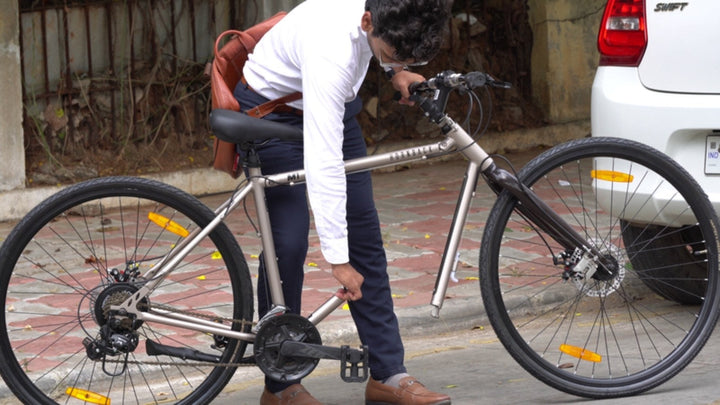
Easy DIY Bicycle Maintenance at Home

Let’s dive into the easy stuff you can do yourself.
1. Clean the Drivetrain (Your bike will instantly feel smoother)
The drivetrain (chain, cassette, chainring) gets dirty faster than any other part — especially in cities with dust, pollution, and pothole splash.
A clean drivetrain = smoother pedaling, better efficiency, and longer part life.
How to do it (super easy):
- Use an old toothbrush + mild dish soap
- Scrub the chain and gears lightly
- Wipe with a damp cloth
This reduces friction and can improve energy efficiency by 2–5%, according to a study by CeramicSpeed’s independent lab tests.
2. Lubricate the Chain (The simplest maintenance move EVER)
If your bike sounds like it’s begging for help… it probably needs lube.
A well-lubed chain improves lifespan and keeps shifting crisp (for geared MTB cycles).
How to lube:
- Clean chain first
- Add 1 drop per link
- Wipe extra oil — extra lube attracts dust
Studies show that dry chains increase wear significantly, and humid/dusty environments speed it up further.
This is why storing your cycle away from moisture helps your lubrication last longer.
3. Check Your Brakes (Takes 30 seconds, could save your skin)
Brakes need to be:
- aligned
- tight enough
- not rubbing the tyre or rotor
Quick brake check:
- Squeeze the brake lever — it shouldn’t touch the handlebar
- Look at pads — at least 2–3 mm should be left
- For disc brakes — no continuous rubbing sound
A simple check prevents sudden failures while riding through traffic or uneven terrain.
4. Keep Tyre Pressure Healthy (Your energy saver)
Riding with low pressure drains energy and increases punctures.
Recommended pressures:
- MTB cycles: 35–50 PSI
- Hybrid/Urban Cycles: 45–65 PSI
Low pressure = higher rolling resistance.
A study published in Applied Sciences shows that optimal tyre pressure significantly boosts efficiency and reduces puncture risk.4
A floor pump with a gauge = game changer.
5. Tighten Bolts (Minimal effort, maximum peace of mind)
Bikes vibrate. City roads especially.
Loose bolts create weird noises, wobbly handlebars, and long-term frame stress.
Check these once a month:
- Stem bolts
- Seatpost clamp
- Brake caliper bolts
- Pedals
- Mudguard / rack mounts
It’s a 3-minute routine with a basic Allen key set.
6. Adjust Saddle Height (Your knees will thank you)
Incorrect saddle height causes knee pain, back pain, and reduced efficiency.
Your knee should have a slight bend at the lowest pedal position.
Quick fix:
- Loosen seatpost clamp
- Adjust height
- Tighten
- Test ride
Small adjustment → huge comfort change.
7. Simple Wipe-Down Cleaning (Forget pressure washes)
Pressure washes force water into bearings.
A microfiber cloth + light soapy water is all you need.
Just wipe:
- Frame
- Handlebars
- Seat
- Rims
Keeping the bike clean helps you spot issues early (like cracks, rust, cable wear).
The Subtle Advantage: A Clean, Indoor-Stored Bike Needs Half the Maintenance
Not a full section — just a truth worth mentioning.
Research from Cycling Industry News and multiple maintenance experts shows that bicycles stored indoors:
- experience significantly less corrosion
- accumulate far less dust and grit
- require fewer chain cleanings
- have longer brake and cable life
- maintain lubrication better
- have fewer paint and rubber issues
If you’ve got a foldable bike, bringing it inside isn’t a chore — it’s just practical.
And yes, stored dry = fewer surprises + fewer mechanic visits.
No bias. Just physics.
Final Thoughts
Bike maintenance doesn’t have to feel like homework.
With a few simple habits — most under 5 minutes — your bicycle stays smooth, safe, and fun to ride.
And quietly, the biggest maintenance hack is simply keeping your cycle dry, clean, and away from the elements, something that becomes effortless if your bike folds and fits neatly into your home.
Small routines. Big savings. Happier rides.