Why Unisex Bicycles Are the Best-Selling Bikes in Europe (And Why the Trend Is Exploding Everywhere)

Alright, let’s break this down the way Europe actually lives, rides, and votes with their wallets — because the “unisex bike” trend didn’t blow up by accident.
Across Germany, the Netherlands, Denmark, Belgium, France — unisex bikes dominate sales charts. And once you understand why, it honestly stops being surprising.
Let’s get into it.
1. The European Mindset: “A Bike Is a Utility, Not an Identity Badge”
Europeans don’t overthink bikes the way a lot of emerging markets do.
It’s not “men’s bike” or “women’s bike.”
It’s:
- Does it ride well?
- Is it safe?
- Is it comfortable?
- Will it last?
- Does it fit my commute?
Unisex bikes remove the fake separation and focus on good geometry that fits 90% of adults.
And because people prioritize use-case over aesthetics, the most versatile style wins.
According to the European Cyclists’ Federation (ECF), over 60% of daily commuters ride step-through or unisex frames.
2. Geometry That Actually Works for Everyone
Unisex bikes often use:
- Mid-step or step-through frames
- Upright riding posture
- Easy-mount geometry
This isn’t about “gender.”
This is about comfort and practicality — especially for:
- office commuters
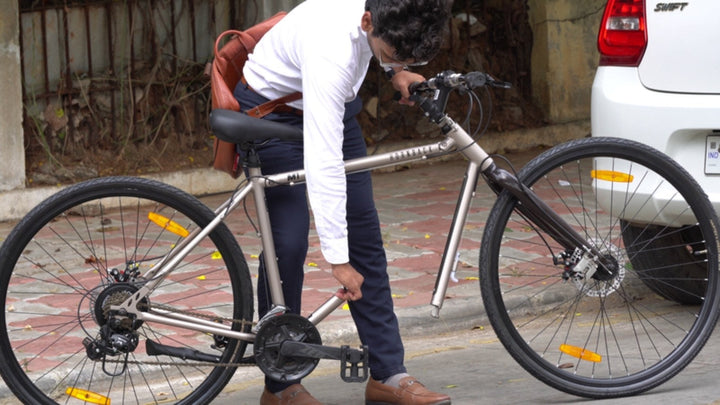
- riders wearing formal clothes
- people carrying backpacks
- older riders
- beginners
- multi-modal commuters (train + bike)
The step-through design reduces strain on hips and lower back — which is a huge reason for its universal popularity.
A study in Journal of Transport & Health found that low-step frames increase adoption rates among new cyclists by 22% due to ease of mounting.
3. Europe Has Weather. Like, Real Weather.
Rain. Wind. Cold. More rain.
Mounting a high-top tube frame while wearing a jacket, scarf, gloves, and boots is… not ideal.
Unisex bikes require less flexibility → fewer slips → fewer injuries.
When weather is unpredictable, convenience wins.
4. Clothes Matter Too — And Europe Cycles in Everything
People in Europe cycle in:
- office suits
- skirts
- trench coats
- long winter jackets
- grocery-carrying backpacks
- rain-resistant ponchos
Unisex frames make mounting/descending effortless no matter what you’re wearing.
This is exactly why countries like the Netherlands and Denmark — where cycling is a “show up in whatever you’re wearing” culture — use unisex frames as their default.
5. Multimodal Commuting (Bike + Metro + Tram)
European cities are built around multi-step commutes.
People often:
Bike → Metro → Bike → Office
This demands:
- easy mounting
- quick stops
- compact handling
- comfortable geometry
Unisex frames are simply more practical in tight metro stations and elevators.
And this is also why folding bikes (including full-size foldables) have surged too — they allow indoor storage and multi-transport commuting without hassle.
6. Lower Maintenance = Higher Adoption
Most unisex bikes use:
- simpler drivetrains
- enclosed chain guards
- upright posture (less strain → fewer adjustments)
- city-optimized tyres
According to Cycling Industry Europe, unisex step-through city bikes have 20–35% lower maintenance requirements.
That’s a big deal when your bike is your primary vehicle.
7. Shared Bikes Revolutionized the Trend
Europe’s public bike-share programs (like OV-Fiets, Nextbike, Villo, Donkey Republic) helped normalize unisex frames because these fleets needed:
- universality
- durability
- ease of use
- quick adjustment
- zero “gendered” sizing
When millions of people ride the same geometry every week, it becomes the mental “default.”
8. One Bike for Everyone at Home
Unlike scooters or cars, families often share bicycles.
A unisex bike means:
- dad can use it
- mum can use it
- adult children can use it
- guests can borrow it
One bike → many users → more value → more sales.
9. European Values: Sustainability + Utility + Minimalism
The modern EU consumer focuses on:
- clutter-free living
- eco choices
- everyday practicality
- buy-once-use-forever philosophy
Unisex bikes fit beautifully into this mindset.
They’re not a statement — they’re a solution.
10. Ergonomics Win Over “Aesthetics”
Let’s be real:
High top tubes are a styling leftover from older men’s road bikes.
They weren’t designed for practicality — they were designed because of old steel manufacturing constraints.
Unisex geometry is more modern, more ergonomic, and more rider-friendly.
Consumers got smarter. Manufacturers evolved. Unisex frames took over.
So Why Is This Relevant to Markets Outside Europe?
Because in urban India, Singapore, the Middle East — cities are facing:
- compressed living spaces
- unpredictable weather
- crowded transport networks
- rising cycling adoption
- more women entering the cycling ecosystem
- younger professionals prioritizing simplicity
The European trends are already showing up here, just delayed by a few years.
Full-size foldable bikes from brands like Hornback also ride this wave — because they combine unisex geometry with indoor storage ability, city comfort, and zero-hassle commuting.
A bike you can share, fold, store indoors, and ride in everyday clothes?
That’s exactly what European buyers have loved for decades.
And now it’s India’s turn.