What Happens When Your Bicycle Fits Your Life

1. When Cycling Fits Work Life, Commutes Feel Lighter
For many people, workdays are already packed:
- meetings
- deadlines
- long screen hours
- mental fatigue
Adding traffic stress on top of that feels unnecessary.
That’s why short daily commutes (5–10 km) are where cycling and electric cycles shine.
A bicycle for daily use:
- removes fuel stops
- avoids traffic bottlenecks
- gives predictable travel time
- clears your head before work even begins
Many riders say the same thing:
“I reach work more awake when I cycle — even on an electric cycle.”
With an e-cycle, you can pedal when you want and use assist when you’re tired, late, or dealing with flyovers. That balance is what makes electric cycles practical, not lazy.
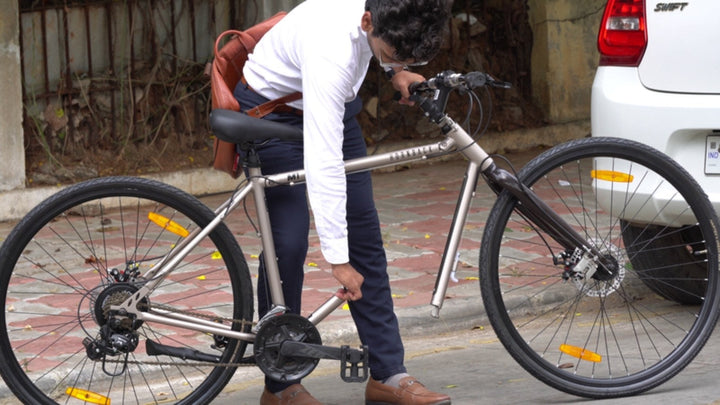
This is where foldable cycles quietly win — when you can bring the bicycle inside the office or home, cycling stops being a risk and becomes routine.
2. Errands Stop Feeling Like a Chore
Think about how many daily tasks don’t need a car or scooter:
- grocery runs
- pharmacy visits
- picking up parcels
- short local trips
Yet people still default to motor vehicles because taking out a cycle feels like effort.
When your bicycle is:
- easy to store
- easy to access
- easy to ride
you start using it instinctively.
This is where cycles for daily use and electric bicycles quietly replace short motorized trips. Riders often say:
“I take my cycle for things I wouldn’t even step out for earlier.”
Foldable cycles like Hornback fit naturally here — they live indoors, unfold quickly, and don’t demand planning. That convenience is what turns cycling into a habit.
3. Fitness Without Scheduling “Workout Time”
One of the most searched questions on Google is:
“Is cycling good exercise?”
The real answer is simpler:
Cycling works because you actually do it.
Daily cycling:
- improves cardiovascular health
- burns calories consistently
- strengthens legs and core
- reduces stress
An electric cycle doesn’t remove fitness — it removes friction.
People who switch to e-cycles often ride:
- more frequently
- for longer distances
- with less joint strain
That consistency matters more than intensity.
Many Hornback riders share UGC-style feedback like:
“I didn’t plan fitness. It just happened because cycling became easy.”
That’s real-life fitness — not gym guilt.
4. Social Life Gets a Little Easier Too
Cycling isn’t just functional — it’s social.
When your bicycle fits your lifestyle:
- meeting friends doesn’t feel tiring
- short evening rides become normal
- weekend plans feel spontaneous
You’re not worried about:
- parking
- fuel
- traffic fatigue
Instead, the cycle becomes part of the outing.
A foldable bicycle also means:
- you can carry it in a car
- store it at a friend’s place
- take it along on trips
This flexibility is why many urban riders say cycling makes them feel freer, not slower.
5. Why “Fit” Matters More Than Features
Most people over-focus on:
- gear count
- top speed
- specifications
But the biggest question should be:
Does this bicycle fit my life?
A good cycle or e-cycle should:
- fit your home
- fit your schedule
- fit your energy levels
- fit your city
Hornback’s approach reflects this thinking:
- full-size ride feel
- foldable for storage
- options across regular and electric cycles
It’s not about being flashy — it’s about removing reasons not to ride.
That’s why you’ll often hear users say:
“I ride more now — not because it’s faster, but because it’s easier.”
Final Thoughts
When a bicycle fits your life:
- cycling stops being a decision
- movement becomes natural
- fitness happens quietly
- days feel less rushed
Whether it’s a regular cycle or an electric cycle, the right bicycle doesn’t demand change — it adapts.
And that’s when cycling truly sticks.